Why Your Back Squat May Matter More Than Your 5km Time
By Seth Brown – Resilient Hunter
There is a persistent myth in New Zealand hunting culture that if you can run well, you are fit for the hills.
It’s an easy belief to hold. Running is simple. It is measurable. It hurts in a familiar way. Most of us have experienced the redline of a hard 2.4km effort — lungs burning, metallic taste creeping into the throat, legs briefly flooded with that sharp post-effort heaviness.
That is peak aerobic distress.
But that is not what most pack-ins or pack-outs feel like.
And that distinction matters.
What Load Actually Feels Like
My base pack weight, before water, sits at 22 kilograms. Rifle, tripod, spotting scope, tent, insulation — the works. Add between one and five kilograms of water depending on season, and I am stepping off somewhere between 23 and 27 kilograms.
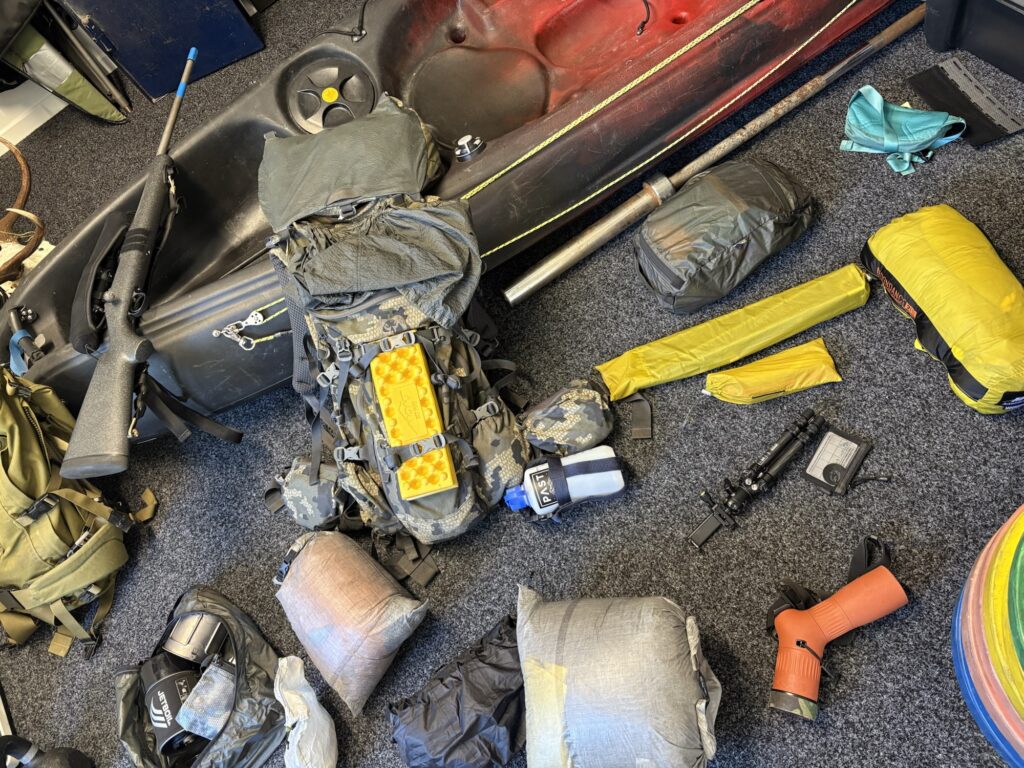
At a bodyweight of approximately 80 kilograms, that places me immediately above thirty percent of my bodyweight the moment I shoulder the pack.
That threshold is not arbitrary.
In “Load carriage using packs: A review of physiological, biomechanical and medical aspects” (Applied Ergonomics), Knapik et al. (2004), working through the U.S. Army Research Institute of Environmental Medicine, demonstrated that once carried load exceeds roughly thirty percent of bodyweight, performance limitation increasingly shifts toward muscular strength and local fatigue rather than purely aerobic capacity.
In simple terms: once the pack gets heavy enough, your legs become the limiter more than your lungs.
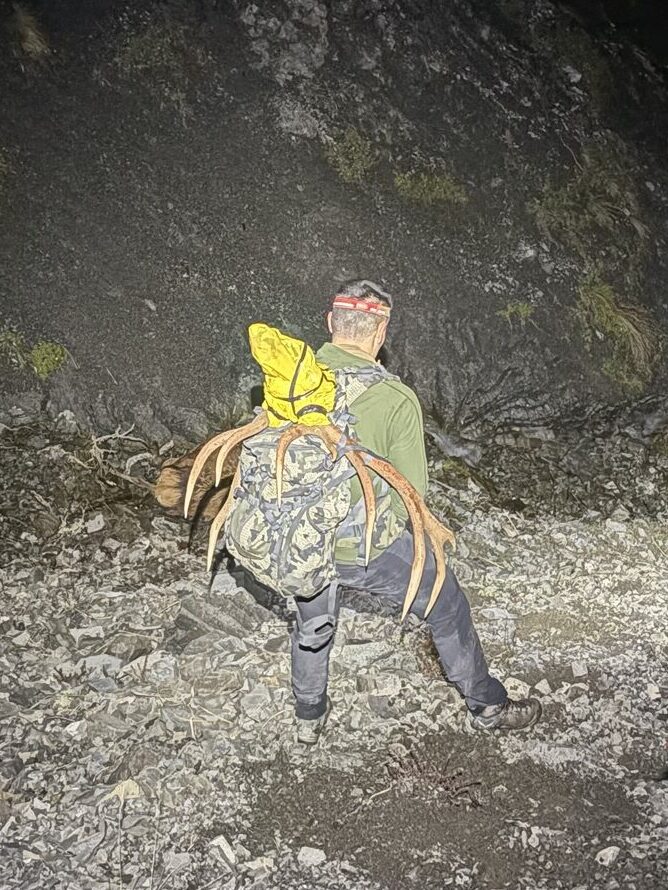
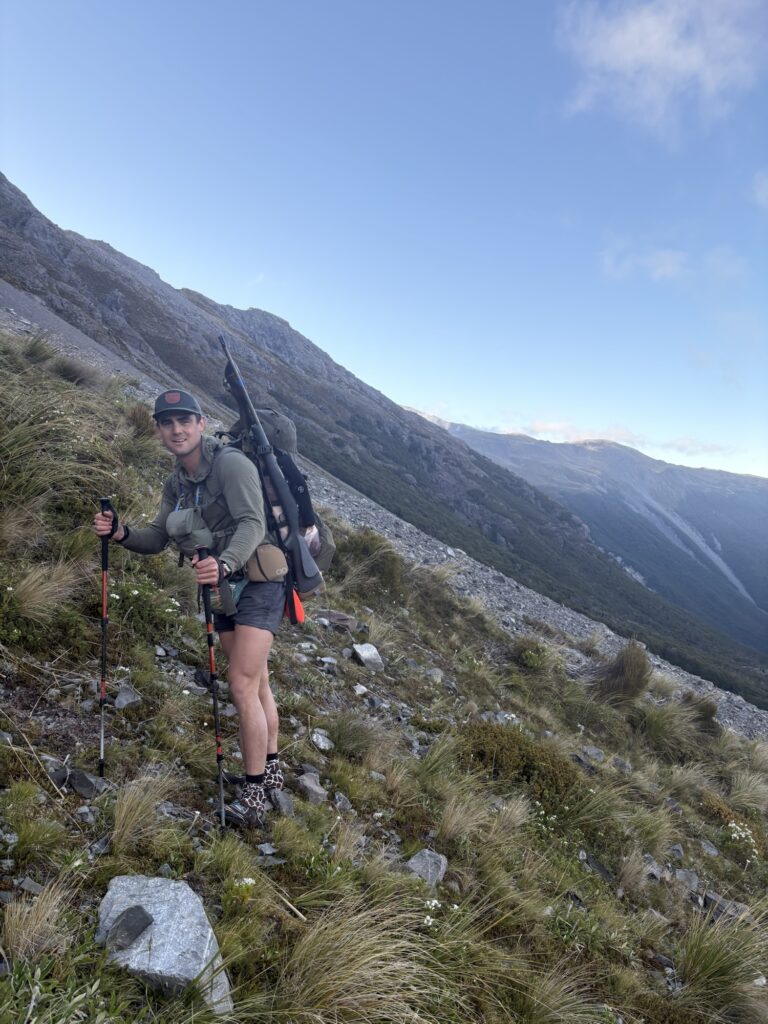
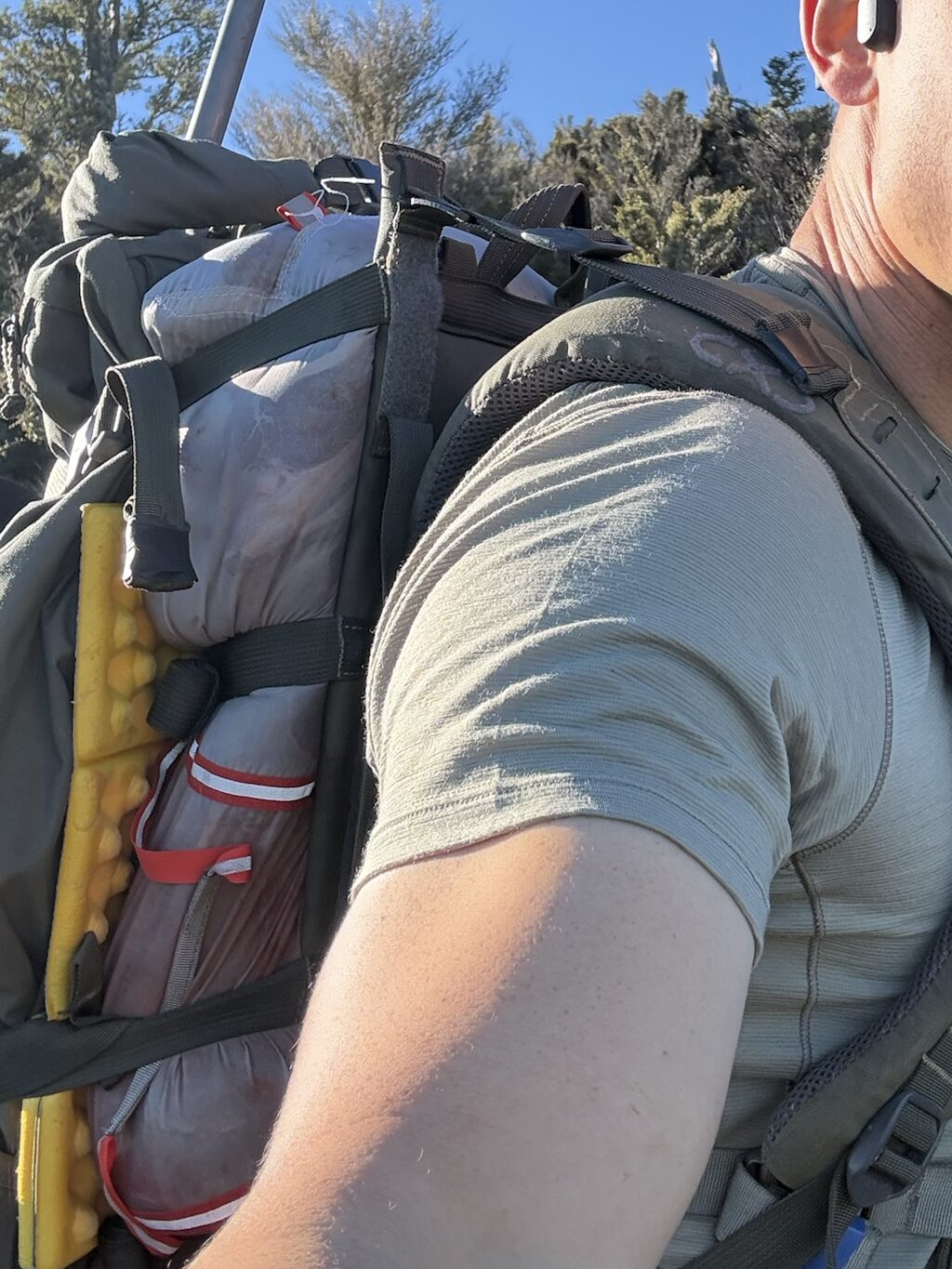
Most New Zealand hunters are familiar with walking into or out of a spot carrying significant weight — heavy base loads, soaked gear, large quantities of meat, awkward antlers tied high on a frame.
What people describe in those moments is rarely true aerobic collapse. It is not the same feeling as a maximal run. You are not tasting blood. You are not gasping for air at your physiological ceiling.
What you feel instead is gradual structural fatigue. Quadriceps working to control descent. Glutes fighting for hip extension on steep climbs. Lower limbs stabilising a shifting load across uneven ground. Trunk musculature bracing repeatedly to prevent collapse under compression.
It is muscular failure before respiratory failure.
And that is a strength problem.
Military Research and Why It Applies to Hunters
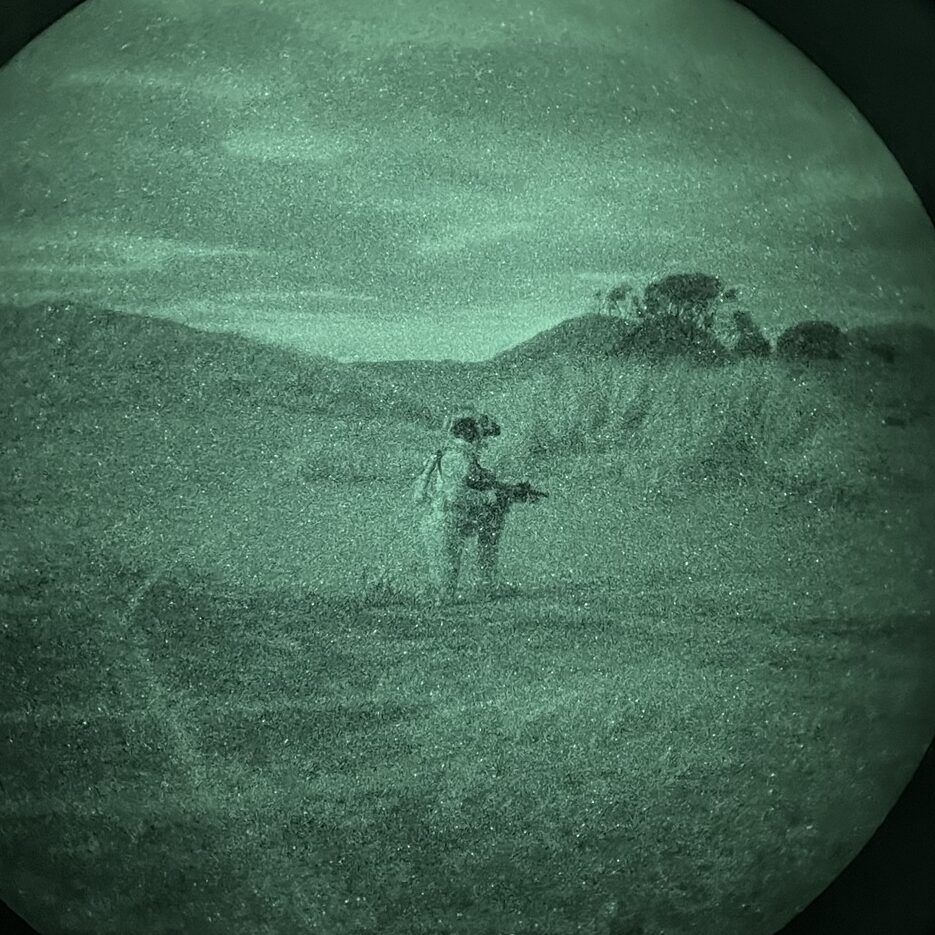
It is easy to dismiss military load carriage research as irrelevant to hunting. The contexts differ. Soldiers move at prescribed paces over predictable terrain. Hunters move in bursts — climb hard, stop, glass, reposition, descend, repeat.
But biomechanics does not care about context.
In 1997, Harman et al. published “Effects of a specifically designed physical conditioning program on load carriage performance” in the Journal of Strength and Conditioning Research. Their findings were straightforward: resistance training improved loaded march performance more effectively than endurance-only training. Strength training reduced physiological strain under load.
That matters in the hills.
Hunters are not chasing twenty kilometres of steady marching. We are chasing two hundred metres of aggressive ascent because a stag has stepped into a clearing at last light. We are descending three hundred metres safely in fading visibility. We are repeating short, steep efforts over uneven ground.
Strength lowers the cost of that work.
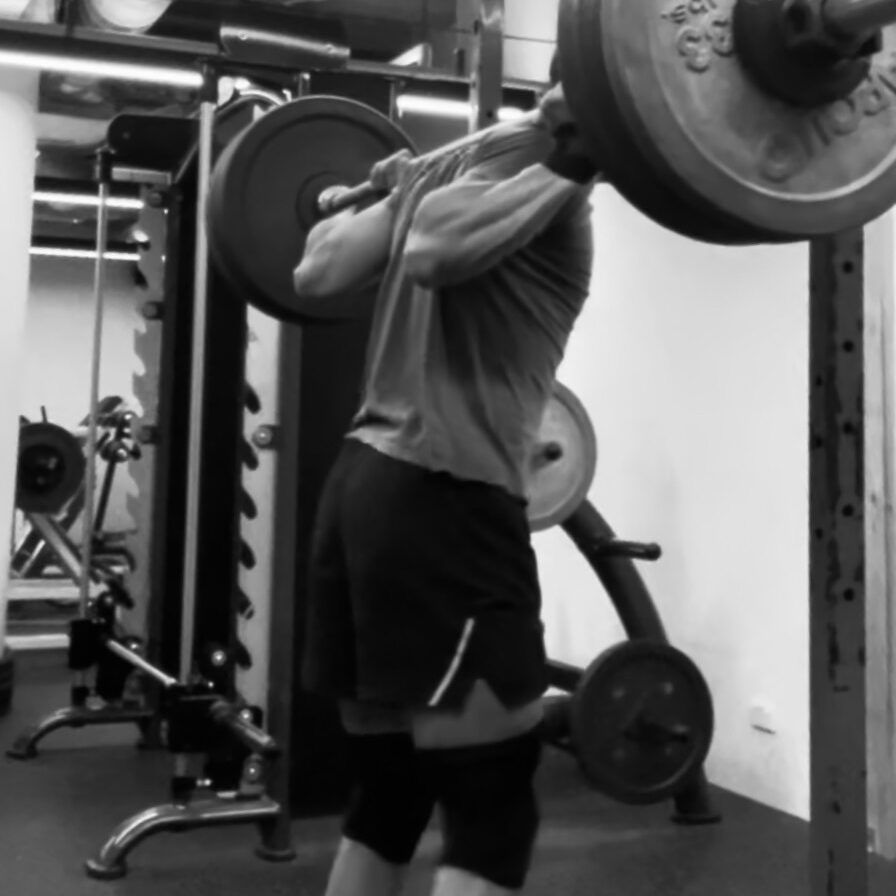
My own baseline barbell back squat has never been exceptional. Maintaining 1.5 times bodyweight — roughly 120 kilograms at 80 kilograms bodyweight — has never been difficult, but it has required consistency.
I am not arguing that a 250 kilogram squat makes someone an efficient mountain hunter. If that were true, powerlifters would dominate alpine terrain.
What I am arguing is that barbell-based lower limb strength is consistently understated when hunters discuss fitness. Running is visible. It produces sweat and Strava data. Squatting is quieter, more deliberate, less culturally celebrated.
But it builds reserve.
And reserve is what steep country demands.
The Selection Lesson
When I was preparing for my fourth selection, training priorities became brutally clear.
Across roughly four days of assessment, only about one hour was spent on competencies that did not involve load — running, swimming, isolated skill work. That equates to approximately one percent of the total time.
Ninety-nine percent of the event was conducted under load.
Would it have made sense to train fifty percent unloaded running and fifty percent loaded movement?
Of course not.
The task defines the preparation.
Backpack hunting in New Zealand is not selection. It is not relentless in the same way. But it is effectively one hundred percent movement under load. Even when glassing, you are carrying the base weight that allowed you to get there.
At no point in my hunting life has my ability to run unburdened predicted my ability to move into position, stabilise quickly, or extract an animal.
Yet most people focus the majority of their conditioning on running.
Rayson et al. (2000), in “The influence of body morphology, fitness, and load carriage on performance during a loaded march” (Military Medicine), found that lean body mass and lower body strength were significant predictors of load carriage performance. VO₂max alone did not explain the variance.
The quote I was given during selection preparation still holds true:
“You can compensate for a weak run with a strong ruck.
You cannot compensate for a weak ruck with a strong run.“
Strength can mask moderate aerobic deficiency. Aerobic capacity cannot mask insufficient force production.
Time and time again I have seen exceptional running athletes struggle under moderate pack weight. Not because they lacked engine. But because they lacked structural tolerance.
A Late February Basin
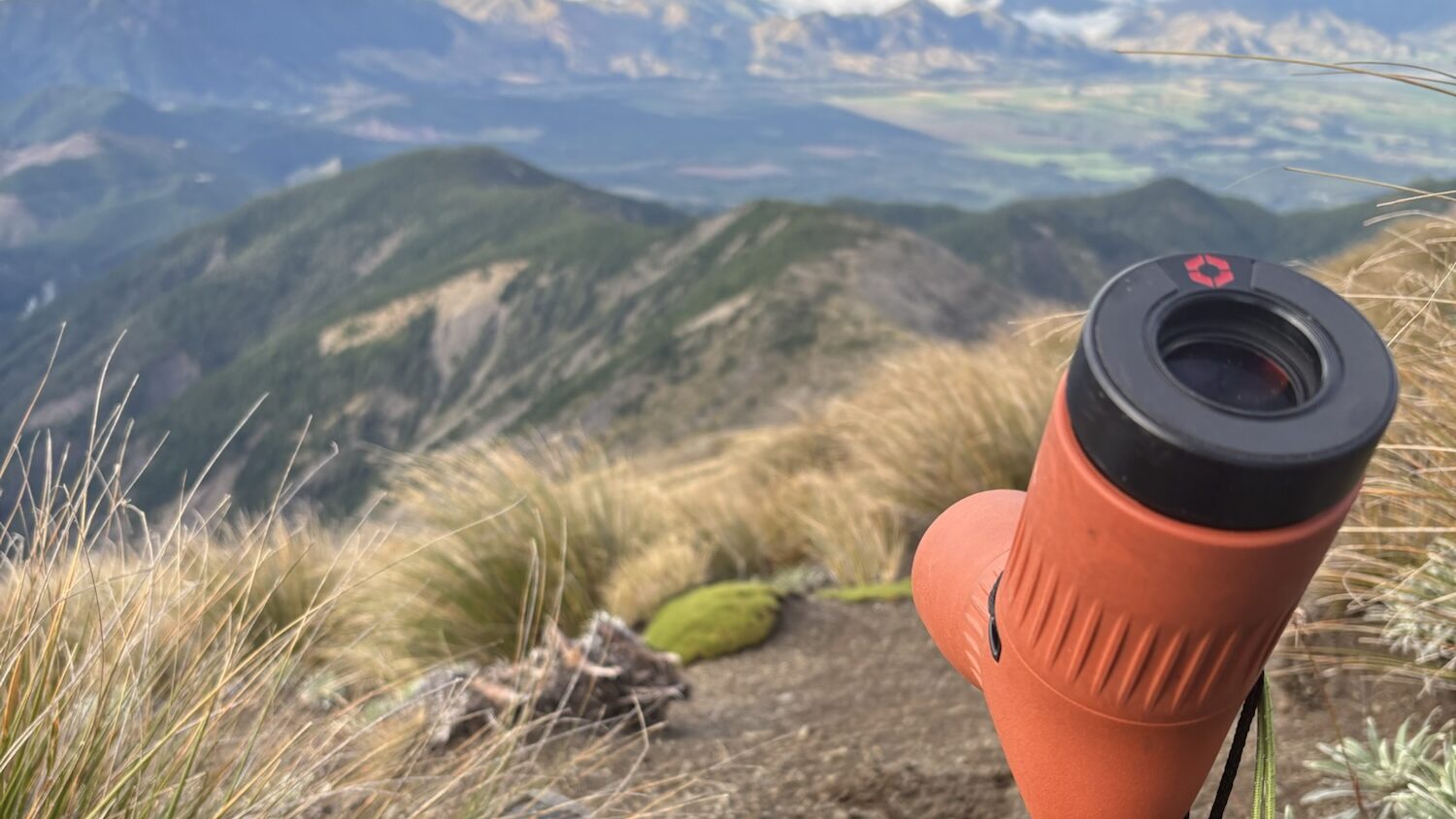
In late February, a friend and I spent six hours glassing a basin. As I’ve written previously regarding mature red stags, animals in that period require collapse of their risk belief before exposing themselves.
We positioned high on a spur, looking leeward into several ridges stretching up to two kilometres away. Efficiency dictated that we see as much country as possible from a single vantage point.
At 1950 hours, a single mature animal appeared approximately 1500 metres from us.
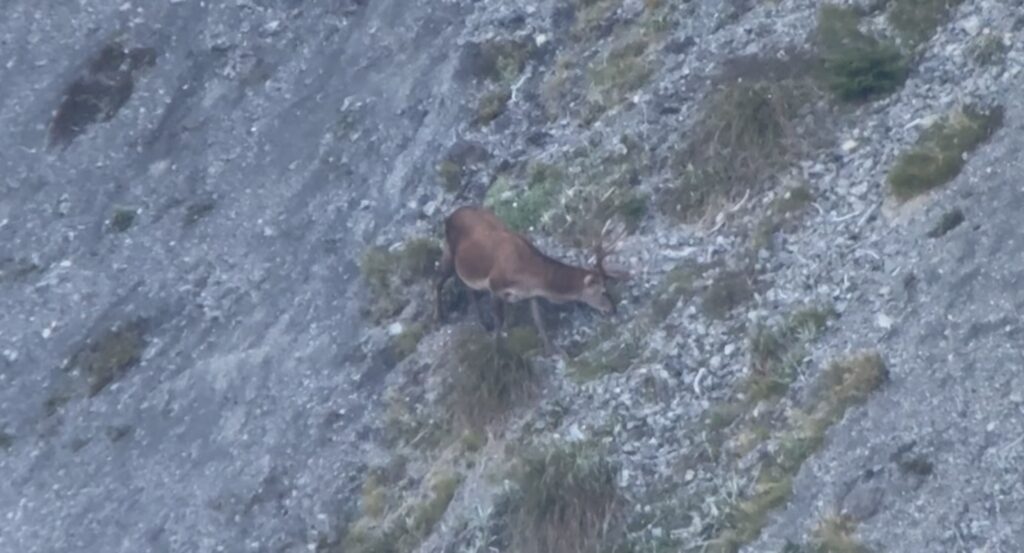
To create a shooting opportunity required roughly two hundred metres of ascent to a viable firing position, followed by three hundred and fifty metres of descent to the animal itself.
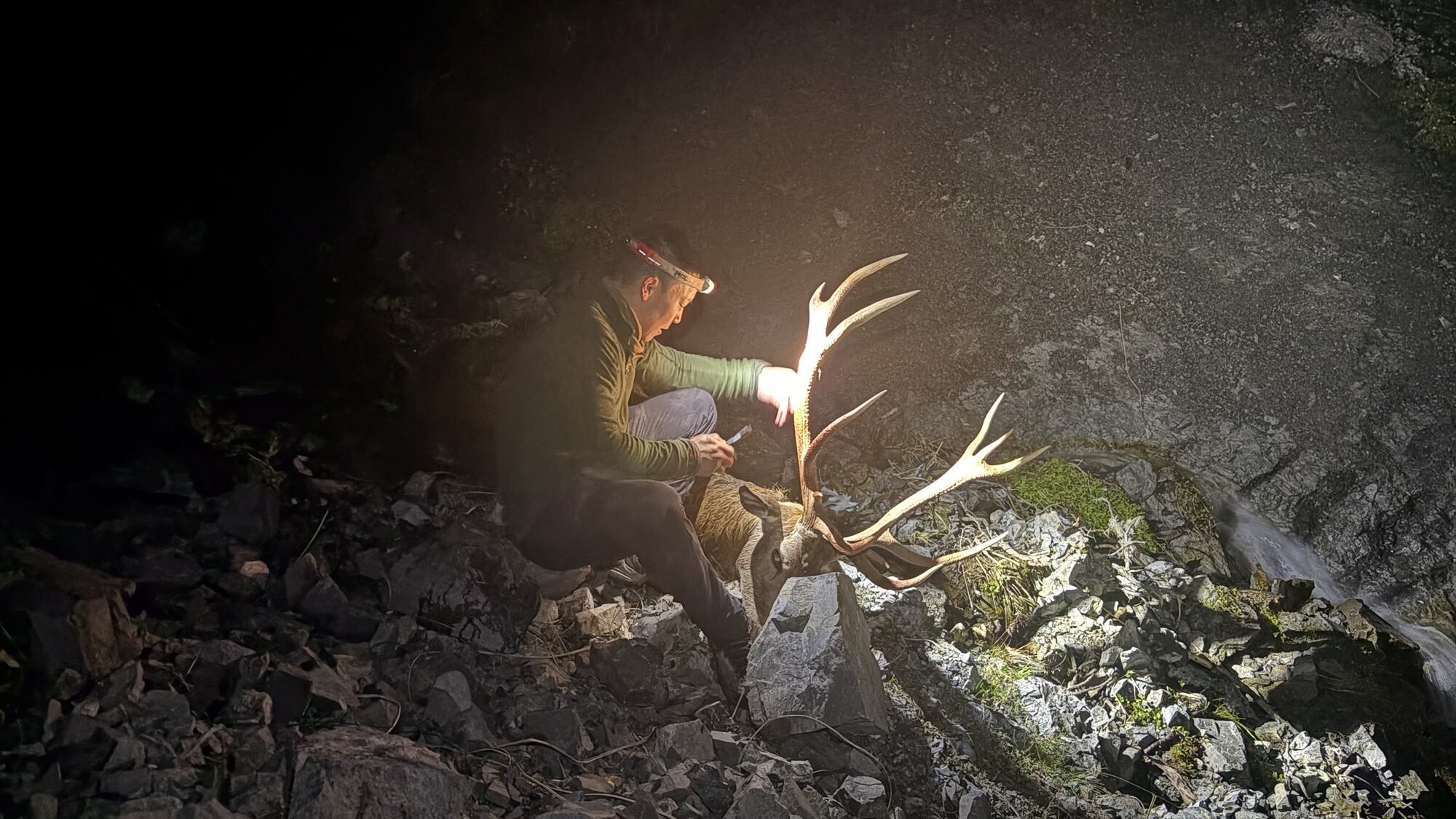
The climb took around forty minutes at a relatively aggressive pace — under load. We still carried the majority of our heavy equipment. The recovery and return to camp took approximately four hours.
Without lower limb strength layered over an adequate aerobic base, we would not have reached that shooting position in time. More importantly, we would not have arrived with the composure required to make a sound decision.
Strength did not replace cardio. It complemented it. It provided reserve. It meant that upon arrival, heart rate was elevated but controlled. Legs were fatigued but stable. Cognition remained intact.
Strength preserved decision-making.
In steep terrain, that is safety.
What I Did for 18 Weeks Leading Into the Roar
Preparation for hard antler season was not random. It was deliberate.
For eighteen weeks, I layered strength, engine work, structural endurance, and lower limb resilience.
The backbone was a Russian-style barbell squat progression three times per week. High sets. Low repetitions. Progressive loading. No theatrics, no maximal testing — just consistent exposure to heavy submaximal force.
The goal was not a lifetime PR. It was to make 120 kilograms feel routine. To build structural reserve so that a 25–35 kilogram pack represented a manageable percentage of capacity.
Alongside this, I ran Simple & Sinister five days per week — one hundred kettlebell swings, with every ten swings paired with a snatch and a Turkish get-up.
The swings reinforced posterior chain explosiveness. The get-ups built trunk stability and shoulder integrity under instability. In the hills, where load shifts and terrain is uneven, that anti-rotation strength matters.
For engine development, I used the Nordic 4 protocol three times per week — four minutes hard, three minutes rest, repeated four times, on either an assault bike or row erg. These sessions elevated VO₂max without excessive joint impact. They built ceiling without requiring high mileage running.
Once per week, I ran Cindy — twenty rounds of five pull-ups, ten push-ups, and fifteen air squats. Not for CrossFit performance, but for structural endurance. Repeated submaximal contractions build connective tissue tolerance in ways maximal lifting does not.
In the final phase, prehab shifted toward power and durability.
Heavy sled pushes and pulls became foundational. The backward sled drags were particularly valuable — relentless quad engagement without spinal compression, reinforcing knee resilience and eccentric tolerance for descents.
Half-kneeling inverse kettlebell presses reinforced trunk stability and shoulder control. Pressing an unstable load from a kneeling base removes compensation and forces the system to stabilise under asymmetry — precisely what happens under pack load.
Kneeling box jumps developed pure concentric power. From a dead start, no stretch reflex, generating force explosively through the hips and quads. In steep country, that ability to produce force quickly matters when stepping dynamically or recovering from instability.
Single-leg drop landings strengthened the lower kinetic chain below the knee. Downhill movement under load is essentially repeated single-leg landings under compression. If your ankles collapse, your knees pay. If your calves fatigue, compensation begins.
This combination built force, taught it to be expressed quickly, and ensured it could be absorbed safely.
The Point
Running builds efficiency.
Strength builds structure.
Backcountry hunting demands both.
But once your pack exceeds thirty percent of your bodyweight — and most serious hunting packs do — structure becomes the limiter.
At eighty kilograms bodyweight and a twenty-five kilogram pack, I am already beyond that threshold before meat is added.
When the basin opens at last light and you have forty minutes to climb two hundred metres to make a shot count, the hills do not care about your five kilometre time.
They care about whether your structure holds.
Strong men carry meat.