By Seth Brown – Resilient Hunter NZ
February has a reputation for being unproductive.
Plenty of glassing, plenty of deer, not much to show for it. I’ve heard it described as “between seasons”, as if red stags simply pause their lives until March rolls around.
That’s not what I saw.
What February really does is strip away the noise. It forces you to watch behaviour without the crutch of rutting logic or predictable movement. If you’re willing to sit long enough, it tells you exactly how a mature stag survives — and, occasionally, how he dies.
Watching Without Results
The first afternoon was uneventful in the way that makes you question yourself.
I spent hours glassing from a ridge that allowed me to look into two basins. Wind was light and steady. Conditions were good. Visibility was excellent. I did what most people would call “everything right”.
For a long time, nothing happened.
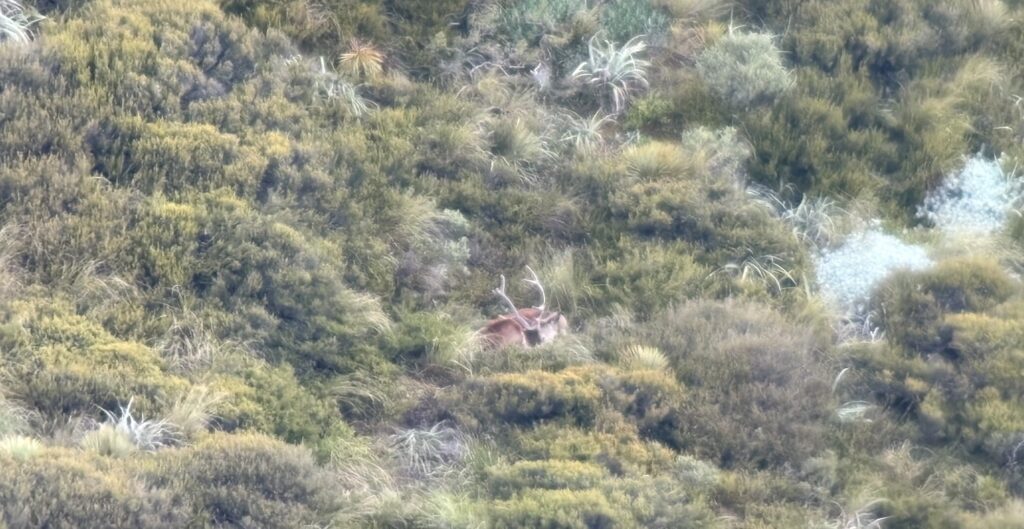
Above: A young stag sleeping in the scrub. In early February, it’s common for the younger animals to still have velvet, while the older stags have stripped, or are in the process of stripping.
Eventually, things started to move — just not in the way I wanted. A deer stood and re-bedded near the timber edge around the 1200-metre contour. Later, hinds appeared on a bush edge and fed briefly downhill before slipping back into cover. It felt like the basin was warming up, then cooling off again.
At one point I caught myself wondering whether it was even worth glassing the middle of the day. It felt like dead time.
But dead time is usually just decision time, and deer are far better at decisions than we are.
When the Basin Woke Up
Late in the afternoon, the basin changed character almost all at once.
Where it had felt empty, it suddenly felt busy. Multiple hind groups appeared. Then a young stag. Then several more deer in different places. Eventually, three younger stags — two- to three-year-olds — were feeding openly on one face.
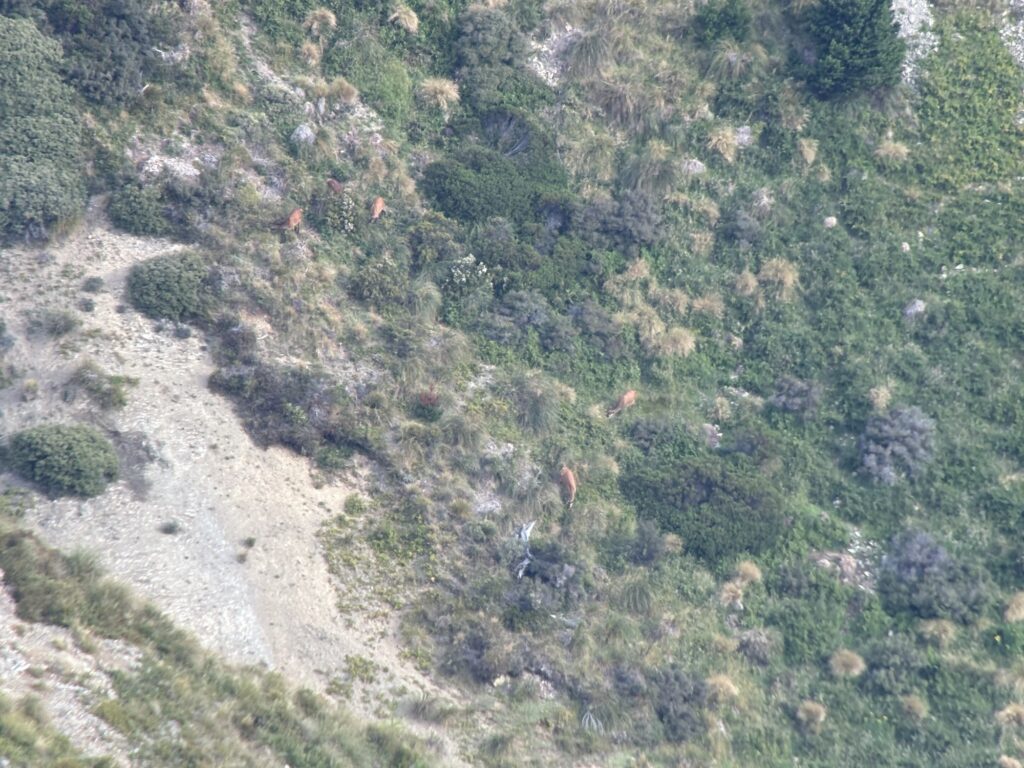
Above: A group of hinds on a distant face at around 1845 in the evening. This is about the first time I saw significant activity.
That kind of activity can be misleading. It’s easy to think, this is it, or worse, this is all there is.
But I’d already seen enough to know what mattered wasn’t who was visible — it was who wasn’t.
There was no mature stag among them. No dominant animal controlling space. No pressure being applied to those younger deer. If an older stag was using that basin, he wasn’t part of that scene.
And that told me more than if he’d been standing in the open.
The Night That Didn’t Deliver
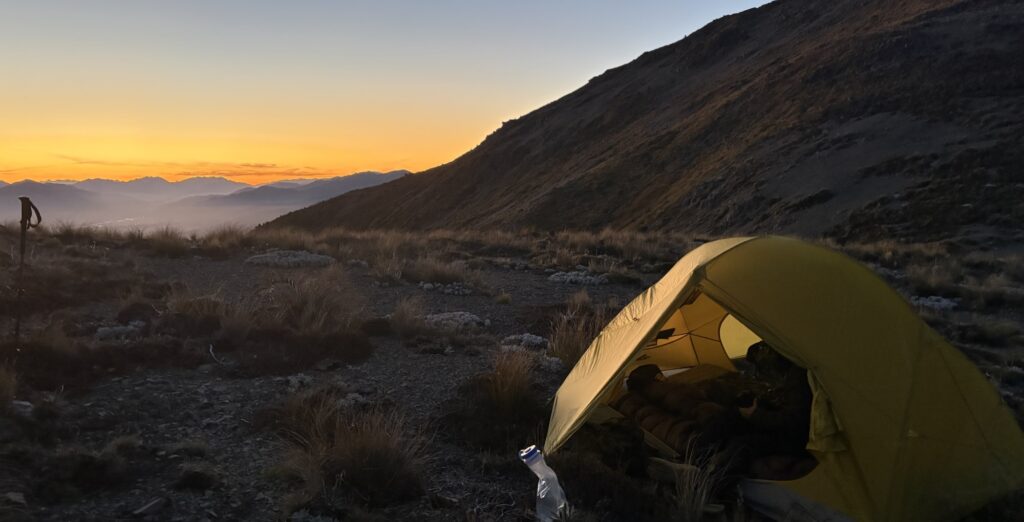
That evening never quite tipped over into something useful.
Deer fed. Movement continued. But the kind of animal I was looking for never appeared. Eventually, light faded and the basin went quiet again.
It would have been easy to write that off as a missed opportunity — to assume the stag had fed somewhere else, or that I’d simply been unlucky.
But what stuck with me was how selective the activity had been. Hinds tested feed and retreated. Young stags fed without consequence. Nothing dominant committed.
That wasn’t randomness. That was restraint.
Morning Makes Sense of the Evening
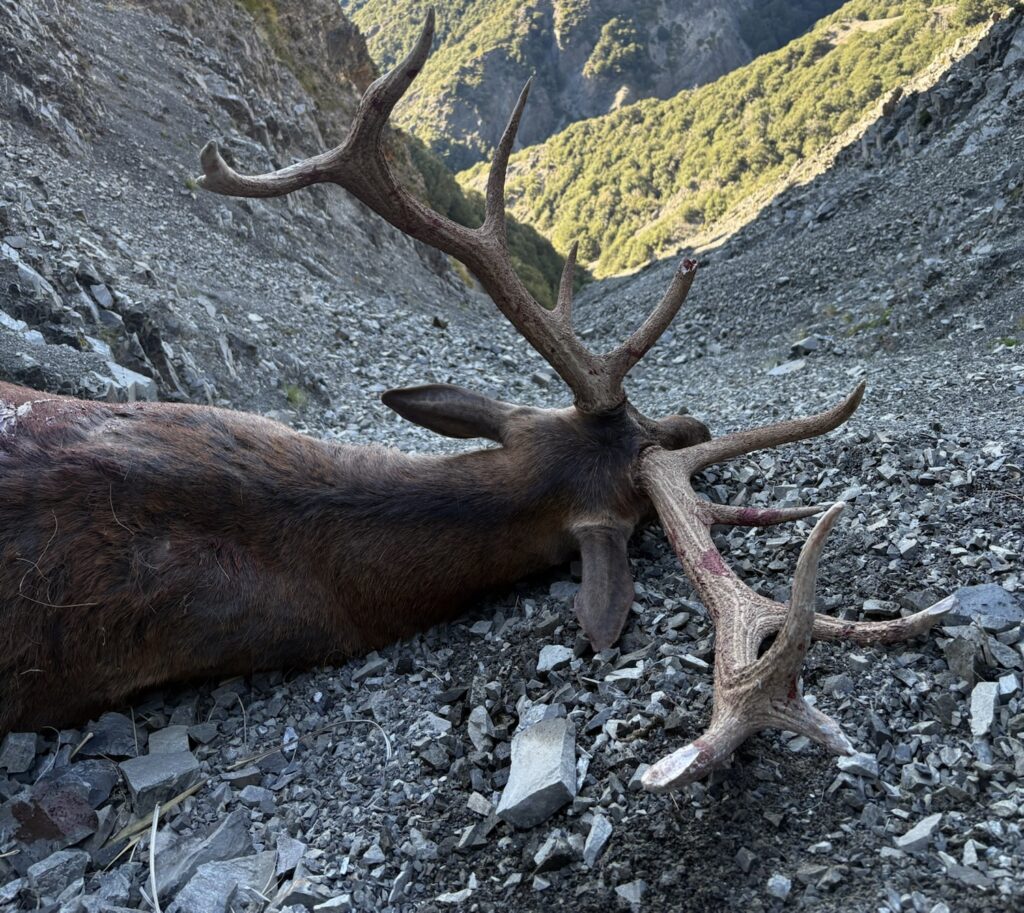
The following morning, at 0740, the picture finally resolved.
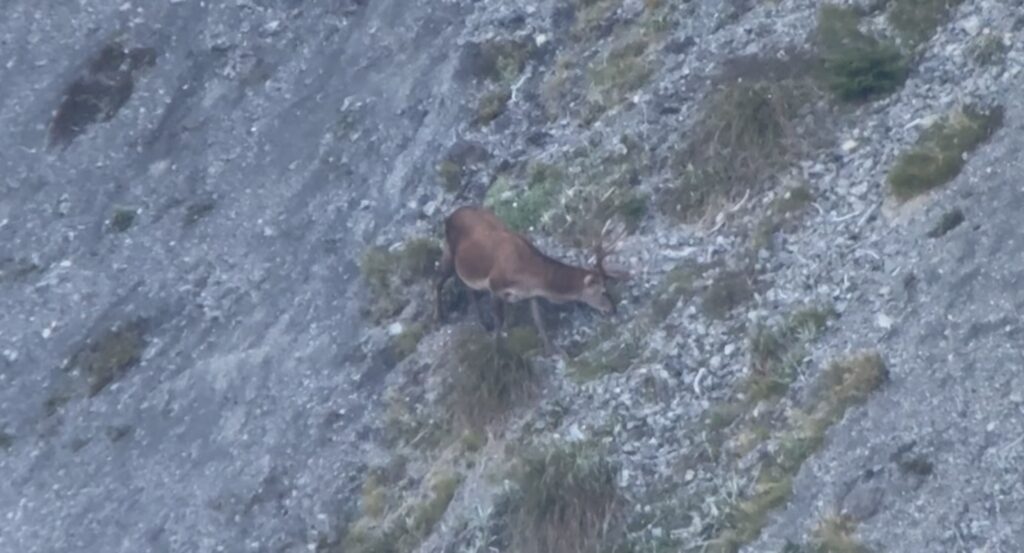
The stag I shot was feeding in full daylight at 1450 metres, well above the bush line. He was on a small island of tussock, isolated by large scree slopes. There was only one clean escape — downhill into a beech forest — and he was positioned so that nothing could approach without being seen or heard.
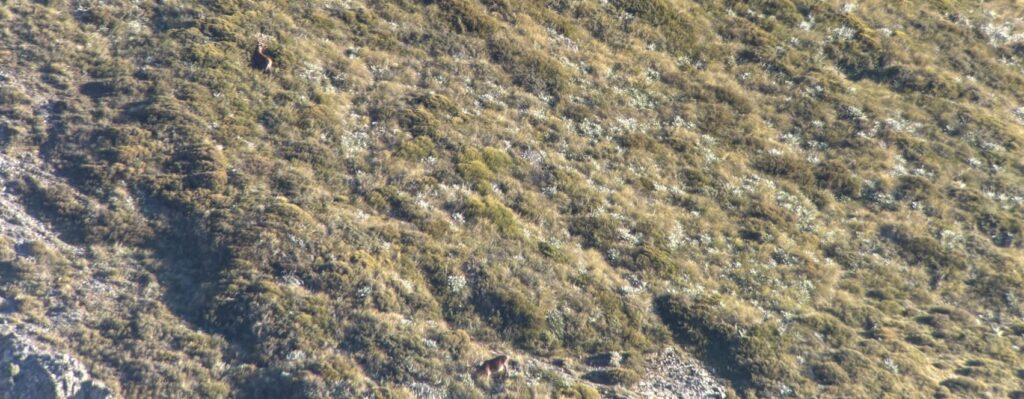
The slope faced north-east.
That detail matters more than most people realise. At that time of year, a NE-facing slope catches early sun. Overnight air has settled. Thermals are just beginning to rise. Wind is clean and predictable. The stag isn’t guessing — he’s reading the environment with confidence again.
He wasn’t feeding because it was morning.
He was feeding because, finally, risk had collapsed enough.
He Wasn’t Alone — But He Wasn’t Social
He wasn’t with hinds. He wasn’t in a group.
He was accompanied by a single younger stag, likely four or five years old.
That wasn’t coincidence either.
Older stags will sometimes tolerate one subordinate animal — not for company, but for information. A younger stag feeds earlier, reacts faster, and absorbs some risk. But the space was still controlled. There were no other stags nearby. No crowd. No competition.
That’s not social behaviour. That’s management.
What February Actually Rewards
Looking back, the pattern is obvious.
The stag didn’t feed openly the night before, even though the basin was active. The conditions weren’t quite right. Light was fading, thermals were flattening, and uncertainty crept in before darkness fully committed.
So he waited.
Overnight, everything reset. Pressure dropped to zero. Air stabilised. By morning, he could feed high, alone, and in control — without committing downhill into bush or joining the chaos below.
That window might have lasted minutes. It might have been his only feed of the day.
But it was enough.
What Changes in Late February
By the back end of February, stags begin to adjust — subtly, not dramatically.
They don’t suddenly join hinds or start behaving like it’s March. What changes is tolerance. Cooler nights make feeding more flexible. Morning activity becomes more reliable. Elevation bands widen slightly, but the preference for clean air, visibility, and controlled escape doesn’t disappear.
If anything, aspect becomes more important than height. NE faces in the morning. NW and W later in the day. Cold, shaded slopes still get avoided unless pressure forces the issue.
The biggest mistake is assuming that evening activity means evening opportunity. Often it doesn’t. Sometimes it’s just the prelude.
The Takeaway
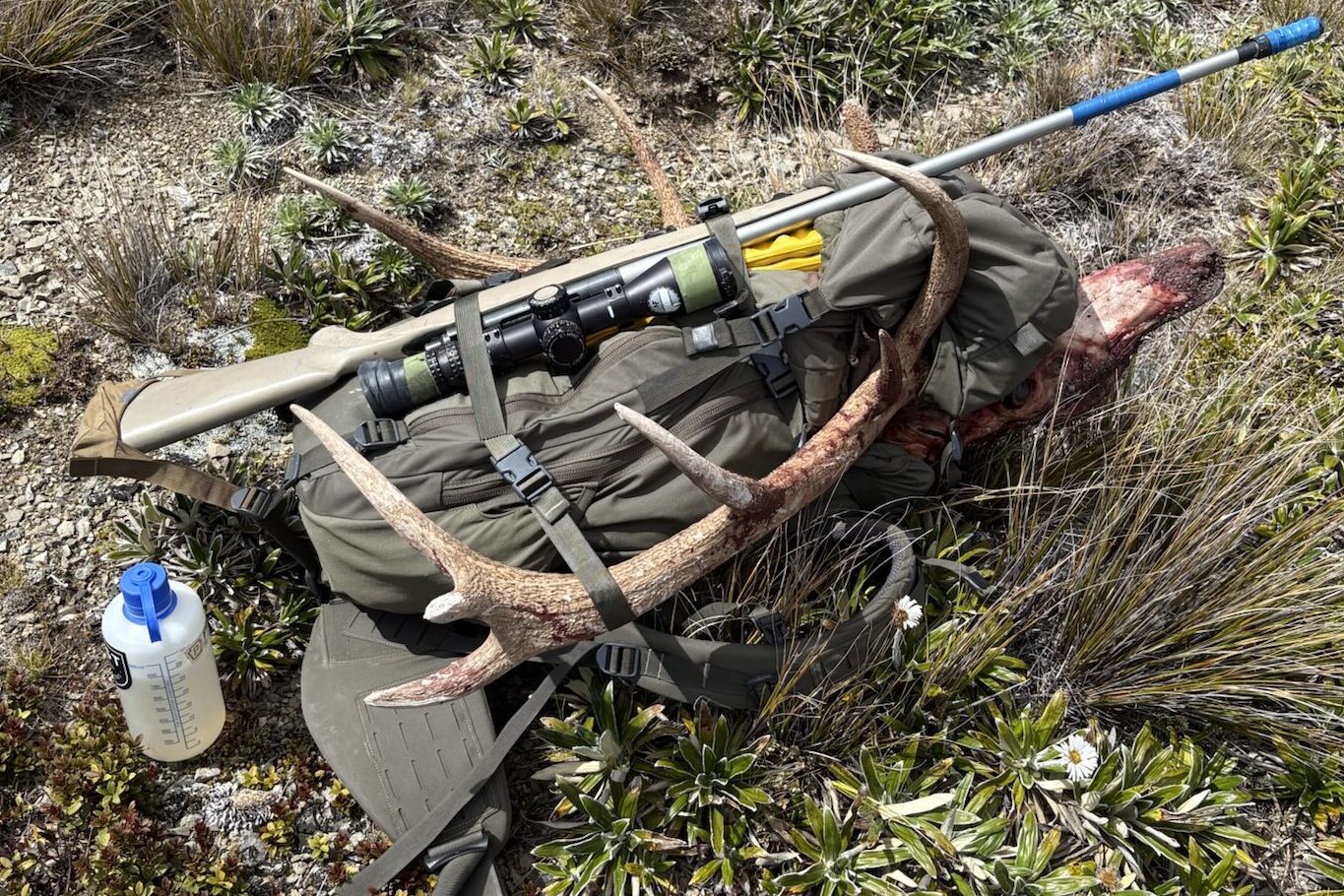
February doesn’t give you obvious answers. It gives you honest ones.
If you’re willing to sit through the quiet hours, ignore the obvious deer, and stay switched on when nothing seems to be happening, it will eventually tell you exactly where a mature stag feels safe enough to eat.
That’s not luck.
That’s paying attention long enough for the story to finish.
The Shift: One Week Later
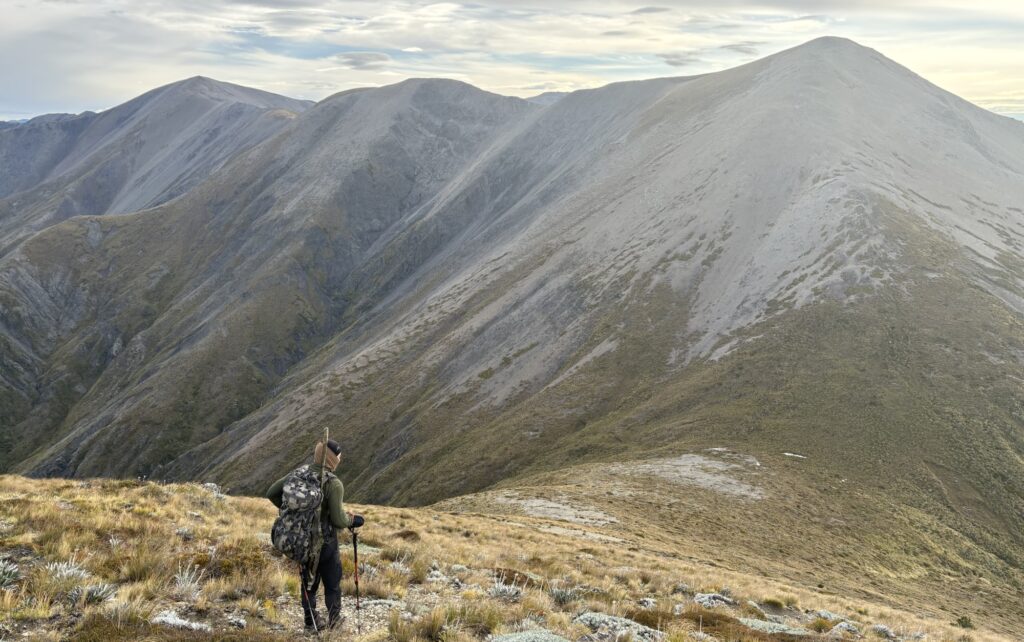
Just over a week after shooting the first stag, I found myself back in the same country.
The basin system was the same. The elevation band was the same. Even the rhythm of the day felt familiar — long hours behind the glass, watching the slopes for the subtle movements that tell you a basin is alive.
But something had shifted.
We saw younger animals again between 0600 and 0830. Several hinds and a few small stags moved across the slopes in the early light, feeding casually before drifting back toward cover. Nothing dominant appeared. By midday the basin settled into that quiet state that every alpine hunter recognises: nothing obvious moving, but the sense that the country is still holding animals.
Light overcast hung across the tops. Wind drifted in from the ENE, occasionally gusting but never strong enough to disrupt the basin entirely. It was the sort of day that feels unproductive if you judge it too quickly.
By late afternoon the wind softened and gradually shifted more northerly. As the sun dropped lower, shade began to climb the slopes and the basin slowly came back to life.
The first movement came from the younger animals. A small group of stags began contouring across the face around 1100 metres, feeding slowly sideways across the slope. After a short time they dropped down into a creek line and disappeared into cover.
That drop mattered.
When younger deer commit downhill like that, the basin changes character. The visible movement disappears, the slopes quieten, and the commotion settles into the lower ground. What remains above is calmer, simpler terrain.
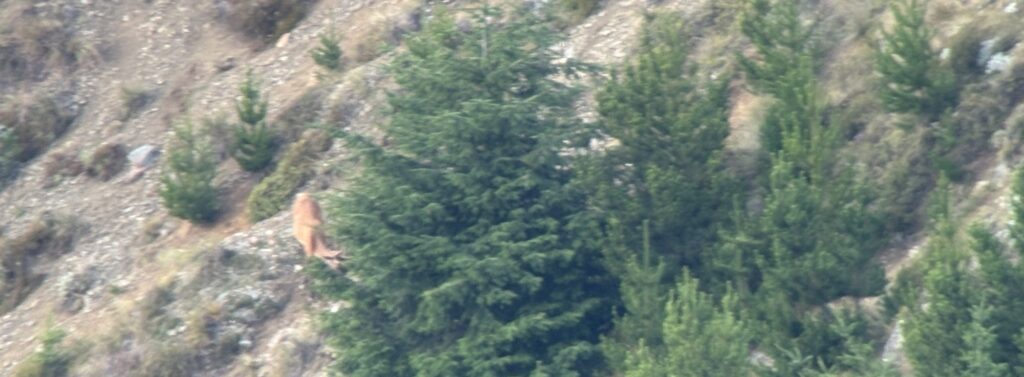
At 1950 — roughly forty minutes before sunset — a mature stag stepped out of the beech forest on a south-facing slope at approximately 1200 metres.
He had been there the entire afternoon.
He hadn’t joined the younger stags.
He hadn’t followed the hinds.
He had simply waited.
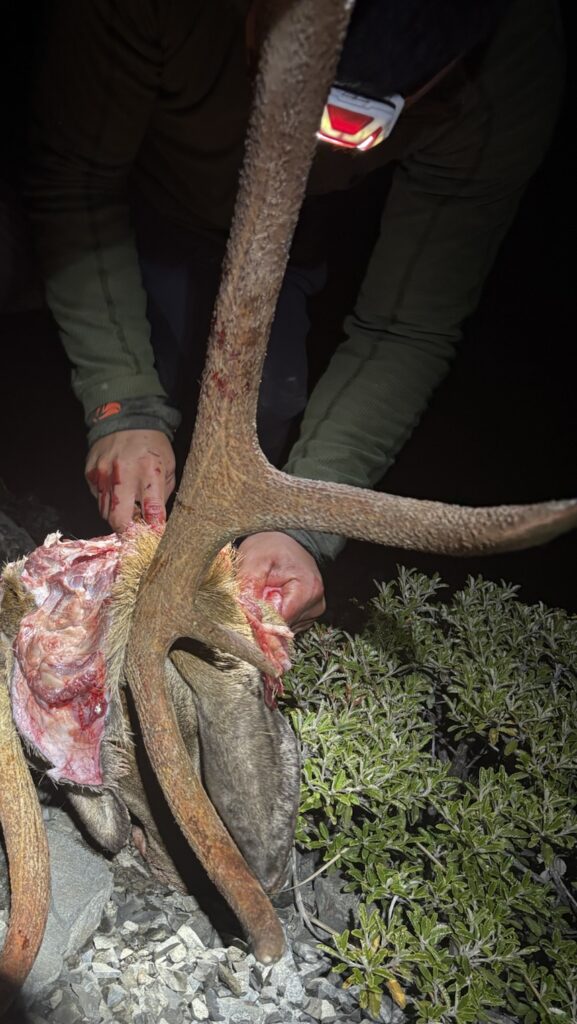
The opportunity window was brief. The shot was taken across the slope at 590 metres. Controlled, deliberate, and over quickly.
But the encounter confirmed something important.
What Changed in a Week
The first stag had been taken just days earlier at 1450 metres, well above the bush line on a north-eastern face during the morning. It was classic mid-February behaviour: high elevation, open ground, clean thermals, and a degree of isolation that older stags favour when the summer conditions are still warm and stable.
This second stag appeared in a different context. He was lower in the basin, closer to the bush edge, and standing on a shaded south-facing slope. Instead of early morning exposure, his movement came late in the evening.
That difference wasn’t random.
It was the season shifting toward late February.
As the calendar moves toward March, subtle changes begin to shape stag behaviour. Nights cool slightly. Hormonal changes begin to take hold. Mature stags start ranging closer to areas where hinds spend more time. The extreme isolation of the high alpine begins to soften.
Evening exposure windows stretch later into the day.
None of these adjustments are dramatic. Mature stags do not suddenly abandon caution, join mixed groups, or move recklessly through the basin. But they do begin to layer down the mountain.
A week earlier, the safest feed had been high and exposed in the alpine, where morning thermals were predictable and disturbance was minimal. A week later, the safest opportunity appeared lower in the basin, where shadow covered the slope and the air had stabilised after the afternoon winds settled.
The behaviour itself had not changed.
The threshold for exposure had.
The Late-February Adjustment
By the latter half of February, mature stags are still driven primarily by security. What changes is the way they achieve it.
They begin to tolerate slightly lower elevation. They spend more time staging along timber edges rather than holding exclusively in the open alpine. Shade transitions become increasingly important, and their evening movements often occur later in the day. Exposure windows shorten, but they shift subtly in location.
The stag is still separate from younger animals. He remains offset from hind groups. His movements are still deliberate and controlled.
But the absolute need for extreme alpine isolation fades slightly as seasonal pressures change.
The difference between mid-February and late February is rarely dramatic. More often it is measured in contour bands and light angles — a hundred metres lower on the slope, a different aspect, or a later moment in the evening.
If you are paying attention, the basin tells you when this shift is happening.
What Didn’t Change
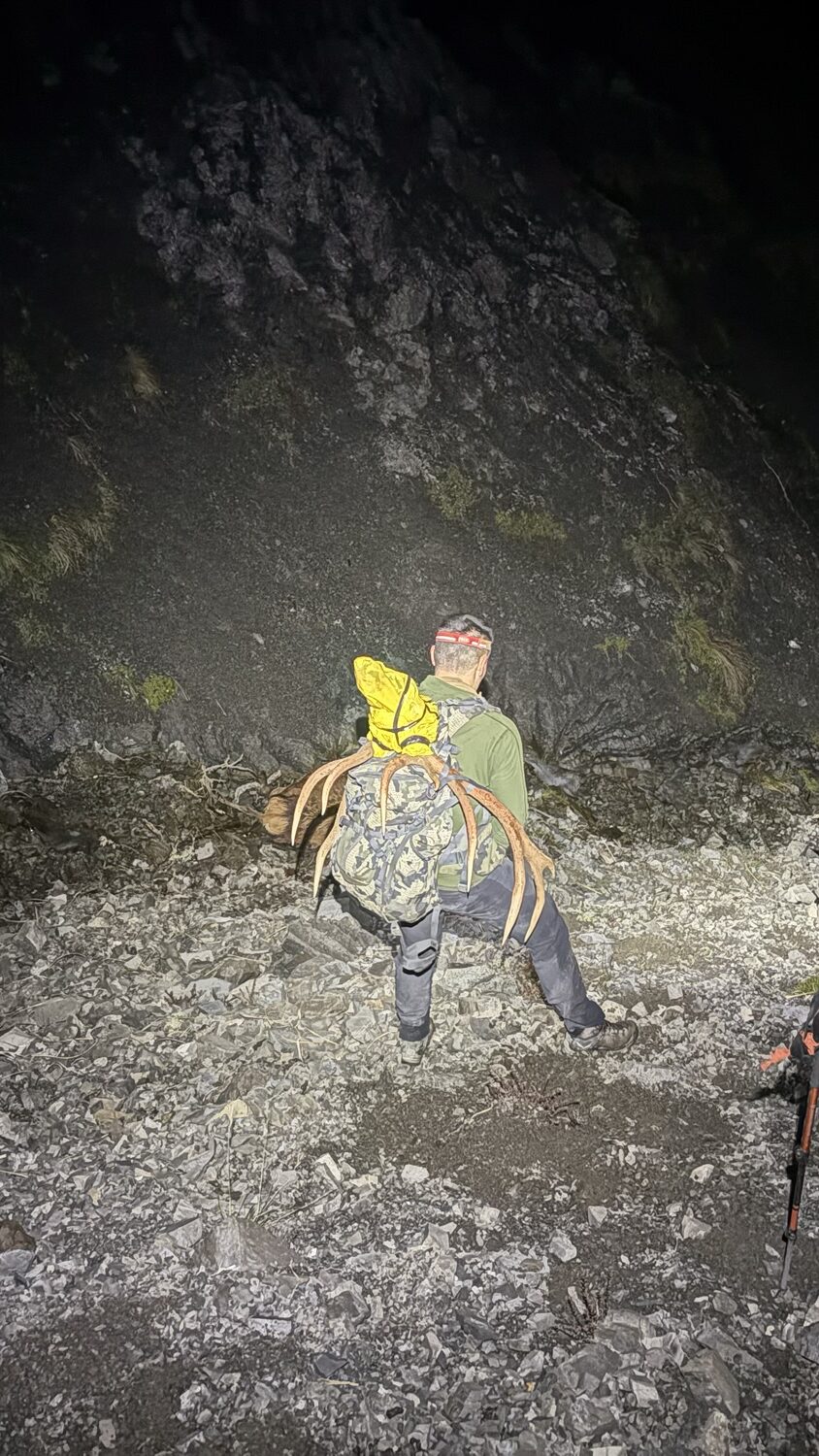
Despite the change in elevation and timing, one pattern remained consistent across both hunts.
The mature stags did not move because other deer moved.
They moved when the basin itself settled.
When the wind stabilised.
When the light softened.
When the terrain offered a controlled exit.
Both times the younger stags fed first. Both times the hinds appeared before anything mature showed itself. And both times the older stag waited until the basin felt calm again before stepping into view.
The clock did not dictate that moment.
Conditions did.
The Lesson
February hunting rarely rewards urgency. Late February punishes assumptions even more.
What it rewards instead is patience, elevation discipline, and a willingness to read the air and the terrain as the day develops.
The seasonal shift itself is quiet.
A hundred metres lower.
Twenty minutes later.
One slope over.
Those small adjustments are easy to miss if you are not looking for them. But if you are willing to notice them, the basin eventually tells you when it is ready.
And when it does, the opportunity window is often short — but very real.